
Related Issue

Spring 2026
Statistics on school shootings will now include Brown, where on December 13, 2025, two students were killed and nine injured in the Barus & Holley building. Jusionyte, who regularly teaches in the building, leads the Center for Human Rights and Humanitarian Studies at Brown’s Watson School of International and Public Affairs. When friends and colleagues urged her to write about the urgent need for policy reform, she felt that she first “needed time to cry, to grieve.”
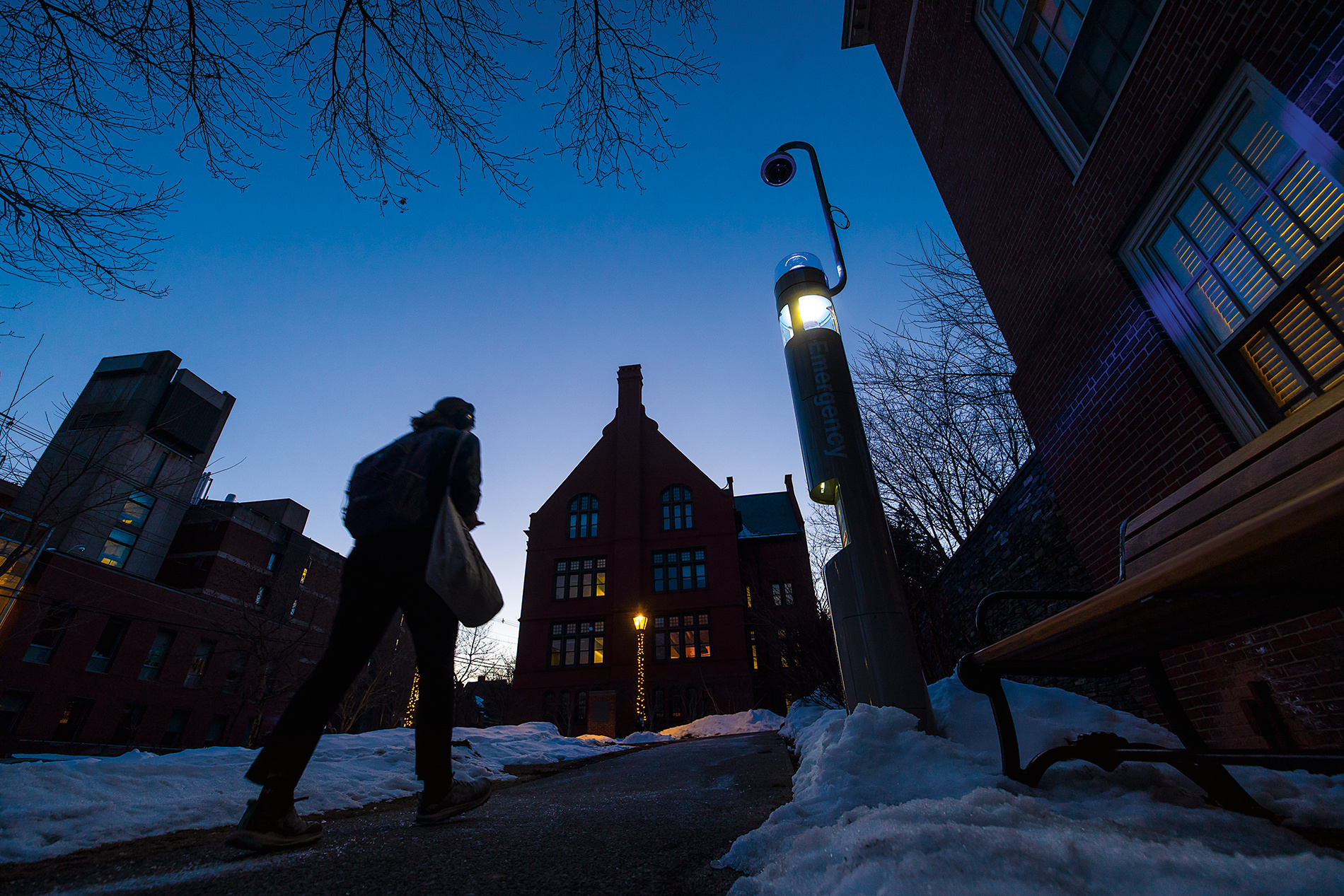
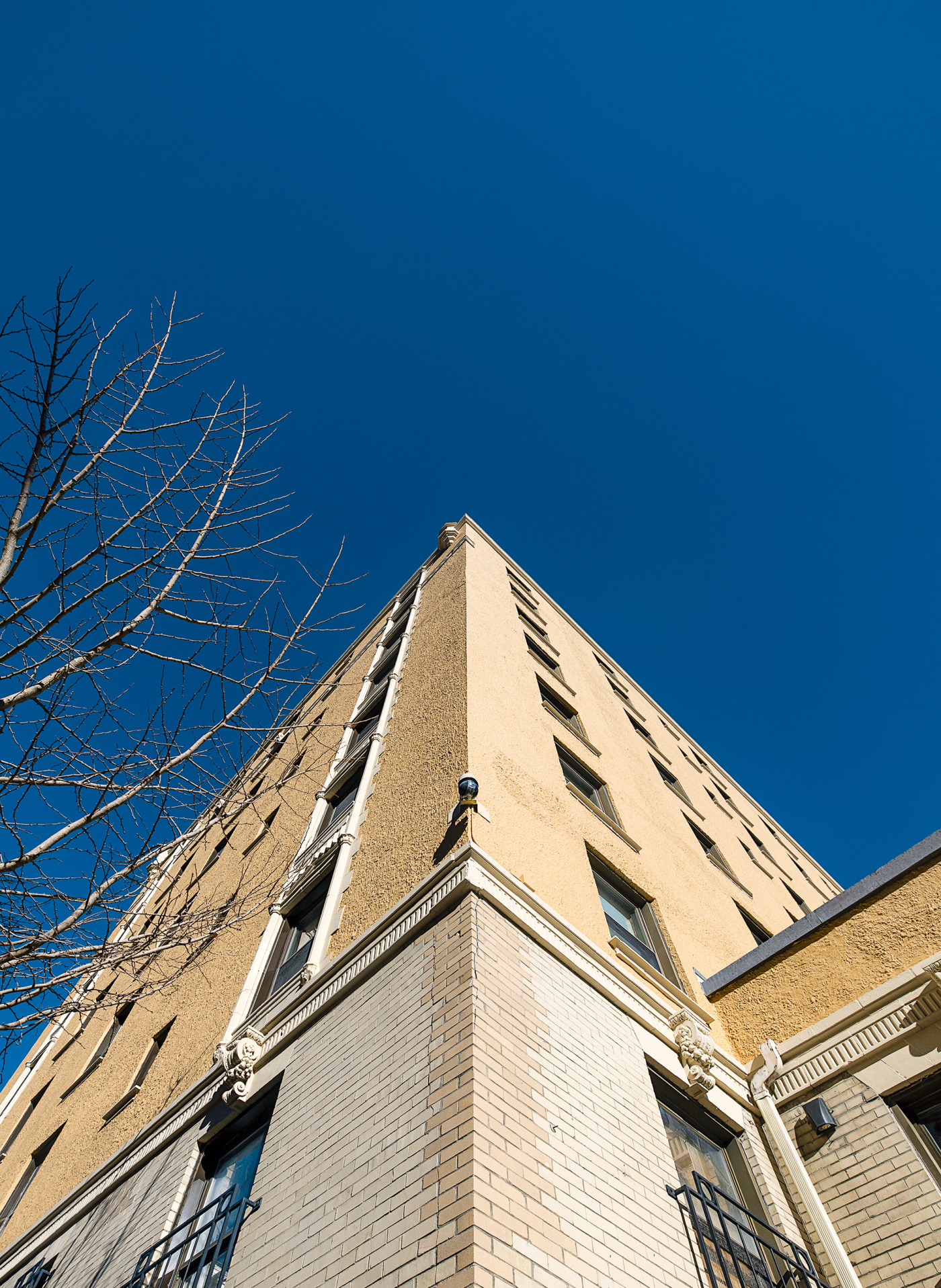
Since the shooting, Brown has significantly enhanced safety and security measures on campus: the University boosted its campus security on College Hill and in the Jewelry District, adding to police patrols in cooperation with local and state law enforcement; tightened building access across campus; installed new panic buttons and security cameras in key locations; and announced plans for mandatory and optional safety trainings.
But what does a secure campus look like? At a time when mass shootings seem almost endemic to the United States and are leaving increasing numbers of college campuses devastated, experts are approaching these mass casualty incidents through the dual lenses of security upgrades and public health strategies.
One of Brown’s earliest moves was to appoint the retired Providence police chief Hugh T. Clements Jr. as interim vice president for public safety and chief of police, after placing Rodney Chatman, campus police chief, on administrative leave.
“My commitment to you is simple and unwavering,” Clements wrote in a letter to the campus community. “We will build a stronger, more sophisticated, and more resilient model of campus safety—together.”
Clements knows Brown not only from his Providence police career but also from his visiting fellowship at the Watson School from 2018 to 2023.
He “felt the calling” to assume the interim post, he said. In doing so, Clements took charge of a public safety department of 65-plus staff, including sworn police officers, non-sworn public safety officers, and administrators who manage areas such as fiscal planning and community relations.
Considered an expert in community policing, Clements said “safety is paramount. For any community to be vibrant, whether it’s a city or a campus, it has to be safe.” His goal is to ensure that Brown has a secure campus defined by “preparedness, vigilance, and mutual care by all.”
Universities, including Brown, have growing numbers of students who have previously experienced a school shooting.
He said the most significant change (as of publication) has been to double the number of Brown public safety officers on every shift to increase static and roving campus patrols. Brown increased private security at events and other high-traffic locations on and near campus, too, with Providence police also providing ongoing support.
In addition, Brown transitioned to full-ID card “swipe access” to enter Brown-owned and Brown-occupied residential buildings, administrative buildings, and most buildings that hold classes (exceptions include the Warren Alpert Medical School). Users must show a Brown ID or use a key in buildings that don’t require swipe access. Public-facing buildings, such as the Brown Bookstore and the Galen V. Henderson Admission Welcome Center, remain open to the public with added security staff. Visitors, vendors, and other guests may enter buildings after being granted access to a specific space.
Brown closed off several lecture halls, classrooms, hallways, and adjacent spaces in Barus & Holley and added security upgrades (cameras, door alarms, and officers) to the building and the adjoining Engineering Research Center and Lassonde Innovation and Design Hub.
Two separate external reviews are underway, one to evaluate Brown’s preparedness and response to the shooting and the other to inform safety and security plans going forward. The reviews, being conducted by the global consulting firm Teneo Risk under the direction of an external law firm, will reflect feedback from members of the campus and local communities.
A public health crisis
The level of gun violence in the U.S. has spurred organizations like the American Medical Association to categorize it as a public health crisis. By adopting strategies used to address other crises, such as motor vehicle safety, medical leaders hope to apply evidence-based interventions to reduce gun violence. Strategies include focusing on the social determinants of health, such as inequality and poverty, and also on stricter enforcement of current firearms laws.
“We have really great evidence of applying that [public health] approach to firearm injury across the U.S., in red and blue states alike,” said Yale School of Public Health dean and emergency physician Megan L. Ranney ’10 MPH.
Ranney completed her residency in emergency medicine and a fellowship in injury prevention research at Brown. Before joining Yale, she held several leadership roles at Brown, and she remains an adjunct faculty member.
She cited four public health tools “shown to make a difference in reducing all types of firearm injury”: youth mentorship programs, such as Big Brothers Big Sisters of America; environmental changes, like planting community gardens, which can improve social, mental, and physical health; gun-storage laws that require owners to lock up their firearms; and bystander intervention trainings, which teach people to recognize warning signs when someone is struggling and to respond in safe, effective ways.
Such tools become ever more important as active shooter incidents increase. The FBI reported 24 of them across 19 states in 2024 alone. These shootings occurred in a wide range of location categories: open spaces, places of business, schools, and government buildings, as well as in one house of worship. And universities, including Brown, have growing numbers of students who have previously experienced a school shooting.
“School shootings are still very rare, but they are horrifying,” said Erica Jade Mullen ’14 PhD, a research consultant with Everytown for Gun Safety, a prominent gun violence prevention organization. She holds a doctorate in sociology and a certificate in social demography from Brown. “What we really need to do is prevent kids from becoming school shooters in the first place.”
Her family was devastated by gun violence in 1991 when, as Mullen understands it, her 14-year-old brother died after a friend, who was loading and unloading an unsecured gun at home, at one point held the weapon to her brother’s head and fired.
“My response has been, ‘There should be no guns on this planet,’” Mullen said. She hopes the Brown tragedy will compel more people to advocate for gun safety. “Rather than just saying, ‘This is really terrible,’ take some kind of action.”
But as Jusionyte put it in a Boston Globe essay, legislation alone won’t solve gun violence. “We won’t legislate our way out of this. We need to change our culture and our society.”
Absent cultural, societal, and legislative changes, campus safety will be an integral component of daily University life. Clements acknowledged that any new security changes come with questions, such as how to protect campus without isolating Brown from the rest of Providence. Finding the right balance might take time.
“Many certainly like the security measures that have [been put in] place, but of course there are many questions, like [how] to ensure that it’s not too much and that this place isn’t locked down like a police state or a fortress,” Clements said. “And that’s important, because you want to be able to ensure that Brown is still Brown going forward, right?”