
Related Issue

Spring 2026
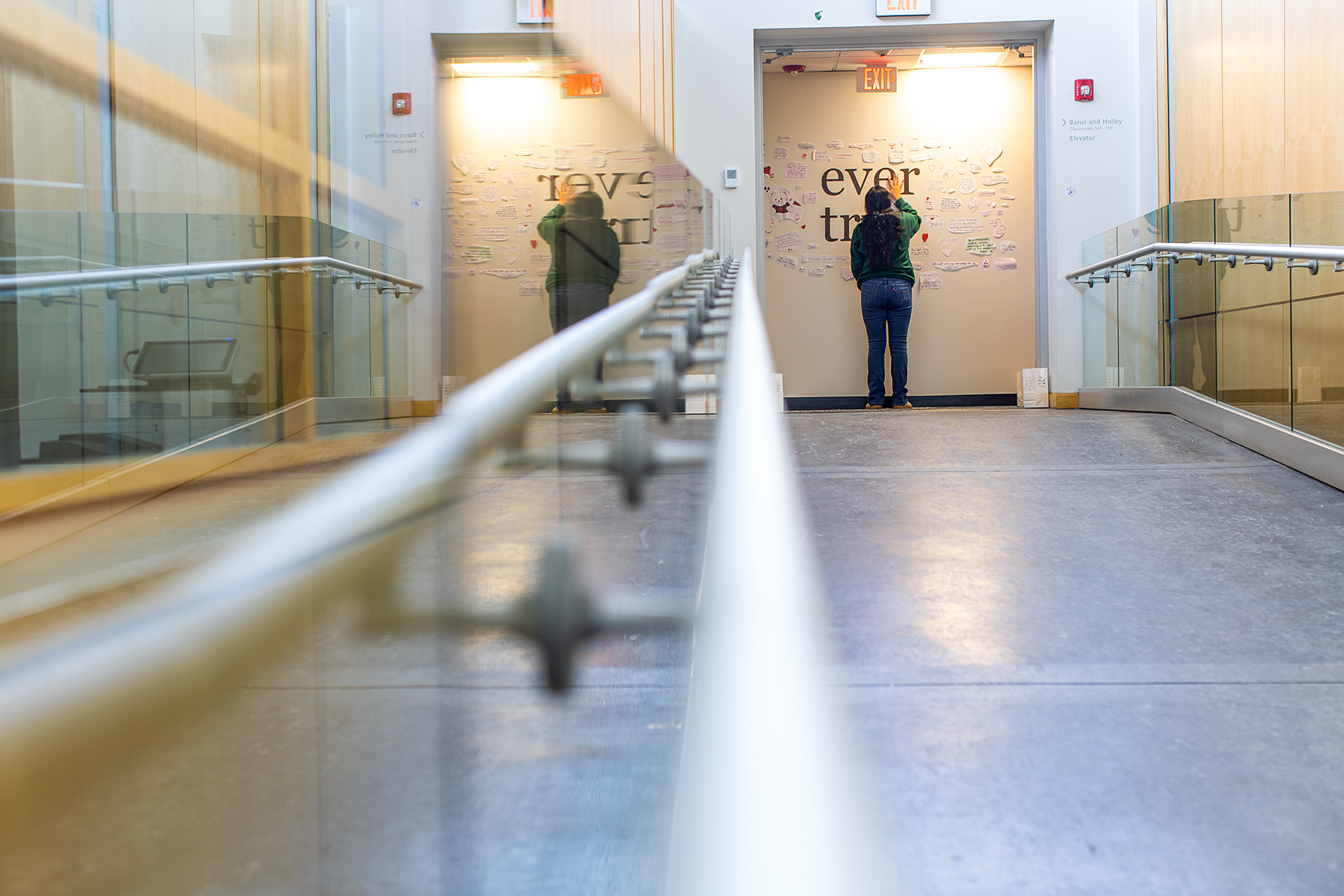
For roughly 12 hours after the shooting at Brown on December 13, students and Providence residents sheltered in place while authorities searched for the suspect.
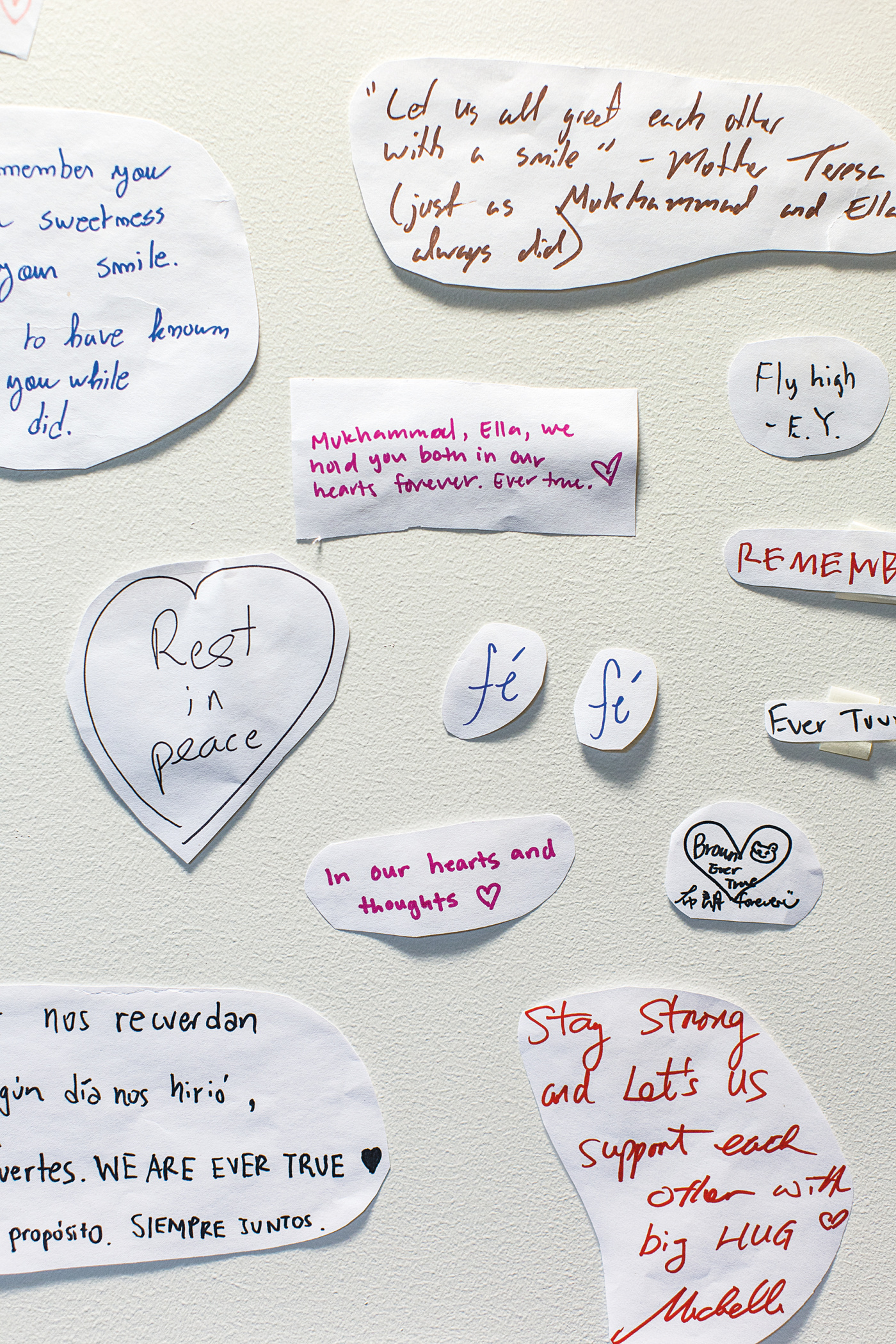
The following day, “Ever True” had been written in large letters in the snow next to the Ratty—a nod to Brown’s official fight song. Those words sprang up throughout the campus and on social media, becoming both a message and mantra.
“It should have been a really isolating moment,” said Matthew Guterl, Brown’s vice president for diversity and inclusion. “But one of the very strange and very Brown phenomena to emerge here is just an extraordinary sense of community.”
That spirit—immediate, collective, and steadfast—is what fuels Brown Ever True, a trauma-informed initiative designed to support healing and repair in the wake of December’s tragedy. Brown Ever True is being coordinated by an operational team led by Guterl, who is working with partners across campus.
Guterl learned about the shooting in a text from his daughter while he was walking his dog. When he returned home, the Africana and American studies professor was pulled into an urgent Zoom meeting with University senior leaders.
In that first gathering, Guterl said, a central question surfaced: What would a roadmap to recovery look like—not only in the coming days, but in the months and years ahead?
“Identifying for the community that we [are] going to be in this together and that we were going to get out of this together was really what Ever True started as,” Guterl said. “And it still is.”
Professor Francesca Beaudoin emphasized the importance of looking at recovery through this community lens. The professor of epidemiology and emergency medicine noted that an individual’s well-being can benefit by being part of a resilient community.
“If we improve the [overall] health of the campus, it helps everybody,” said Beaudoin, who is also the interim dean, School of Public Health. “[The programming] we’re putting in place is meant to mitigate the neurological and psychological responses that can happen after trauma.”
This programming expands mental health and healing services for the entire campus, while emphasizing a holistic approach to resilience, community connection, and sense of safety and well-being. Through Ever True, the campus can learn about a broad array of new and existing services, such as counseling and psychological services, academic support and accommodations, information about safety and security, and online courses and workshops covering resiliency after trauma, as well as 24/7 crisis support.
But recovery isn’t just about individual therapy appointments, said Patricia Poitevien ’94, ’98 MD, vice president for campus life. “Ever True … focuses on transforming immediate crisis support into a sustained culture of care … building community-wide resilience. Whether it is through peer mentorship, leadership opportunities, or collaborative programming, we provide the tools for students to rebuild their confidence and resilience.”
President Christina H. Paxson, an economist and public health expert, views Ever True as an invitation to reflect on how a campus remembers—and how it moves forward.
“What does it mean to grieve as a campus?” Paxson asked. “What are the inflection points coming up in six months, a year?”
Psychological first aid
Research from the Substance Abuse and Mental Health Services Administration suggests that in the immediate aftermath of disaster, many communities enter a period of cohesion—the “honeymoon” phase. Over time, though, that unity can give way to despair or disillusionment as everyday sights and sounds, news stories, and anniversaries reactivate memories. Eventually, many communities move into a longer span of processing grief and rebuilding routines.
This trajectory was familiar to Nicole Nugent long before December’s tragedy. A professor of psychiatry and human behavior at Brown, Nugent specializes in trauma and resiliency and brought this expertise to Ever True. The clinical psychologist noted that people can get overwhelmed by physiological responses to trauma—racing thoughts, elevated heartbeat, or even emotional numbness. In response, Nugent shaped a protocol she dubs “psychological first aid.”
“That first step [is] just helping people know that this [response to trauma] is really common,” she said. “Be patient with yourself and be kind to yourself.”
Practical guidance also matters: prioritizing sleep, using breathing techniques, exercising, and maintaining a regular routine—simple steps that become lifelines when the nervous system is overloaded. These steps, Nugent said, are key on a campus of high achievers. “We don’t want people to feel like they have to get an A in this [recovery] journey.”
Other coping tools require more nuance, particularly around social media. “These algorithms are built to suck you into the most upsetting information,” she said. “[But] if we approach the news media with intention … picking a news source that we can trust and engaging with our friends and colleagues through social media can be good as well.”
Recovery isn’t linear, Nugent noted, and the Brown community will experience a range of reactions over time. Individuals, too, will vary in how and when they engage with Ever True.
Nikita Redkar was having trouble sleeping after the tragedy. The PhD student in chemical and environmental engineering was in Barus & Holley the morning of the shooting and spent much of winter break holed up in her apartment. “I was just too afraid to … leave,” she said, “which is abnormal for me.”
As a member of the Graduate Student Council, Redkar learned about Nugent’s work with Ever True and gained a new perspective on the science of trauma. “A lot of people don’t realize that the body remembers, even if the mind doesn’t.”
Redkar said Brown’s outreach was especially vital for graduate students, many of whom remained during the winter break, unlike undergraduates who left after Brown shut down campus. She noted that undergrads, once they were back, gravitated to events geared toward fun and bonding rather than the ones focused on addressing trauma.
“As we were trying to navigate what to do, I think a lot of [graduate] students needed to process that on their own.”
But, she added, as the months go by, students at all levels may be more likely to access Ever True services as events like finals, commencement, and returning to campus in the fall spark reminders of what happened.
Let Brown be Brown
In the days after the tragedy, Matt Guterl reached out to colleges and universities that had faced a campus shooting within the past decade. His peers shared what had helped, what they wished they had done sooner, and what they had learned the hard way. Michigan State University staff sent Guterl a box filled with squishy stuffed toys.
“We wanted to share a few with you,” read the note inside, “in case there is a moment when a quiet squeeze helps, or when one can be passed along to a colleague, friend, or student who may need it.”
While taking cues from other universities, the operational team also recognized that healing is clinical, social, creative, and communal. Therefore, Ever True includes not only the School of Public Health, but also faculty leaders and campus life staff, deans and student leaders, human resources staff, and the Brown Arts Institute.
Paxson calls this a testament to Brown’s collaborative spirit, “where people have a lot of agency—students, faculty, staff—in driving what happens and focusing on community building.”
Trained as a social scientist, Paxson says she usually looks to evaluate empirical evidence as a measure of success, something that will be difficult to do with Ever True. But she adds she’ll know if Brown is on the right track if the university continues to attract the same sort of intellectually curious and open-minded students, as it has for more than a century.
It’s important to recognize that “healing isn’t a single event,” noted Poitevien. “It’s the sustained presence of a support system that adapts to students’ changing needs. We know recovery is happening when students return to communal spaces, whether in large gatherings like … our interfaith memorial service, or in smaller collective events like those run by student organizations.”
Guterl has seen some early indications that they’re on the right track. He mentioned a snowstorm in late January when he saw students spontaneously dancing, playing music, and building snowpeople on the Quad.
“That, for me, was a moment that felt like ... people are still able to experience joy and let Brown be Brown.”