
Related Issue
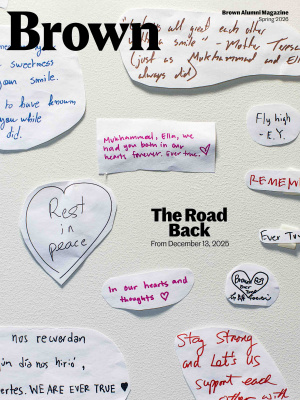
Spring 2026
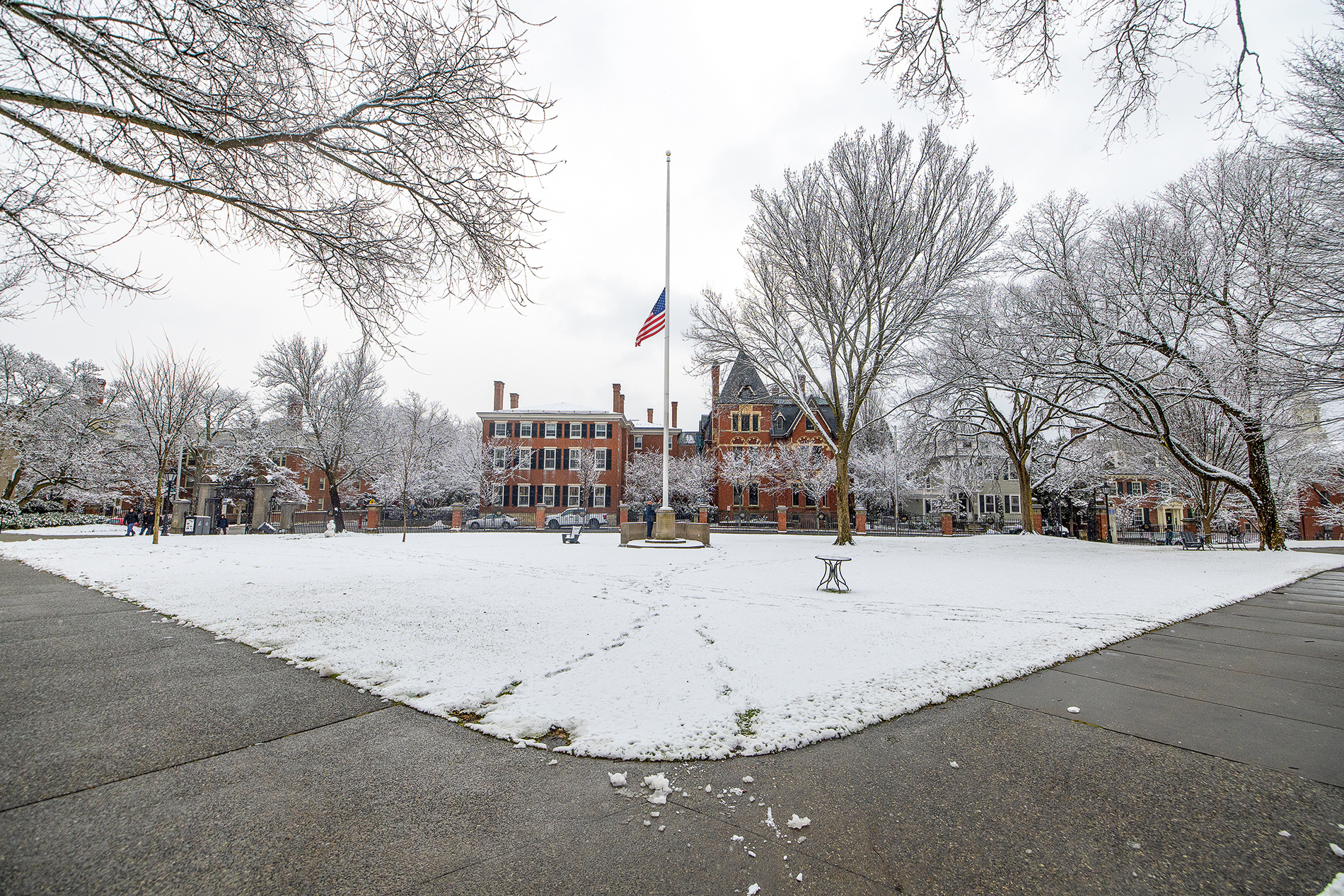
Five days after the mass shooting at Brown’s Barus & Holley building on December 13, students gathered around a makeshift memorial in front of the 1960s Brutalist-style structure. They took turns cuddling police comfort dogs brought to campus from across Connecticut—including Jules, a soulful-eyed black Labrador retriever.
It was a thoughtful, comforting gesture, one that has become a standard feature in the aftermath of campus shootings nationwide. The presence of the dogs reflects how Brown’s initial response largely followed a script now sadly
familiar to American colleges and universities, as mass shootings have transitioned from unthinkable tragedies to something schools must anticipate—even in states with strict gun laws.
James Alan Fox, a Northeastern University criminology professor who studies mass shootings, said that between 2000-2022, the U.S. has averaged about one “active shooter event” per year on college campuses. No school shooting has been anywhere near as deadly as the one at Virginia Tech in 2007, which killed 32 and wounded 17.
Virginia Tech’s response created a kind of template for subsequent campus-shooting responses, one made up primarily of a campus safety study with security upgrades to follow, an institutionwide beefing up of psychological and wellness services, a series of events such as memorials and vigils to promote schoolwide healing, and inevitably the need to address post-incident lawsuits from students and families.
“There’s often finger-pointing, and people want to blame somebody,” said Rob Kilfoyle, director of public safety at Canada’s Humber Polytechnic and president of the International Association of Campus Law Enforcement, headquartered in Bloomington, Indiana.
Brown now joins an unwelcome list of schools that have experienced shootings in recent years, including Florida State University and Kentucky State University in 2025; the University of Nevada, Las Vegas, and Michigan State University in 2023; and the University of Virginia in 2022.
Nearly all faculty, students, and staff contacted at these schools said that for the remainder of the semester—or for the first term back after a shooting that occurred at the end of the previous one, as it did at Brown—people were anxious, despite feeling solidarity on campus. However, a sense of normality usually returned by the following semester for the vast majority of the community who were not direct survivors or witnesses to the shooting.
What happened at Brown is “tragic and awful,” said Fox, “but over time the campus will return to its baseline mood.”
Safety Upgrades
Kilfoyle believes that a common pattern emerges among schools following a shooting: the determination that campuses, even those woven into the city (like Brown’s), should not be locked down.
“One of the driving principles of universities is to be open environments where ideas are shared and all sorts of people are invited to come there,” said Kilfoyle. Fox added, “You just can’t lock down a college campus the way you can a K-12 school.”
Short of lockdowns, campuses that experienced shootings implemented numerous safety enhancements. The most common included installing additional security cameras, especially in common areas, transitioning more buildings to restricted card access, and equipping doors with panic buttons or manual bolts that can be engaged instantly during a campuswide alert. But staff and students said the most conspicuous change was the presence of often yellow-vested security patrollers, typically concentrated near the site of the shooting before their numbers waned roughly a year after the incident.
A common pattern emerges among schools following a shooting: the determination that campuses, even those woven into the city (like Brown’s), should not be locked down.
That’s key, said Kilfoyle: “You want to be able to stabilize the campus environment as quickly as possible and bring back a sense of safety, security, and community.”
Heightened security measures, though, need to be balanced against the fact that an overly securitized campus can create its own sense of “paranoia,” said Brooke Weinmann, a sociology doctoral candidate who teaches undergraduate classes at the University of Nevada, Las Vegas.
Following the shooting at UNLV, Weinmann wanted to buy a door jammer for an interior door handle to keep it from being openable from the outside. “But ultimately, I didn’t buy the pole because I didn’t want to keep enforcing the paranoia” that had sprung up after the shooting. She added, “It’s hard to lock in the class because students are always rolling in late.”
Psychological trauma response
In the wake of shootings, schools enhance their psychological and counseling services, often increasing staffing and campuswide alerts so that psychological support is available to everyone. Similarly, Brown launched Brown Ever True, an initiative that focuses on short- and long-term recovery.
It’s key to understand that people in a campus community will have dramatically different levels and durations of post-incident trauma, anxiety, and depression based on proximity to the incident, as well as their own baseline mental health, said Stephen Benning, associate professor of psychology at UNLV.
Benning found that the mental health of most people on campus returned to baseline levels three months after the shooting. Psychological fallout requiring intensive treatment is highest among survivors who were injured, witnessed the shooting, or were close enough to hear gunshots, Benning said.
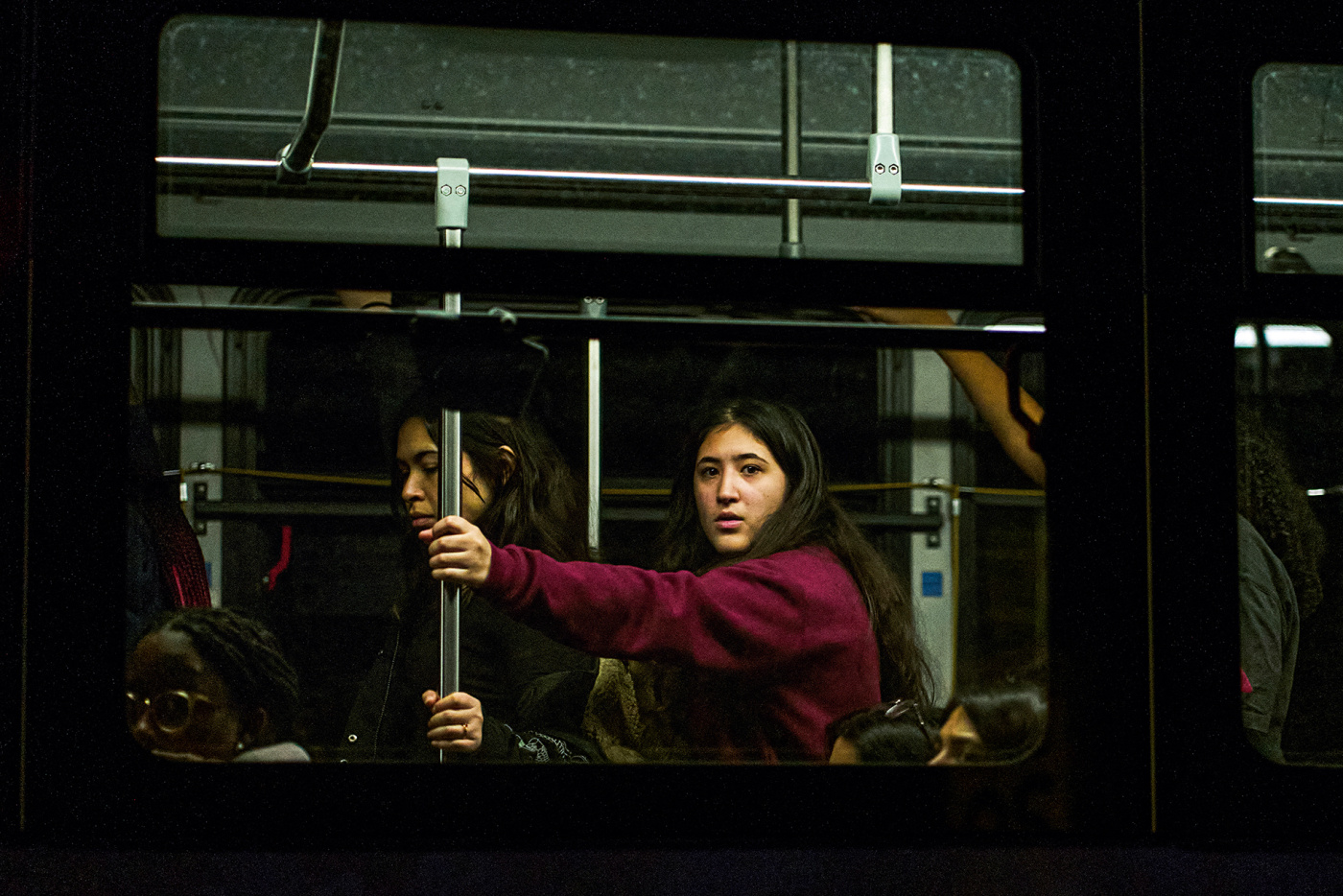
Marlee Morgan, 22, was on a University of Virginia campus bus in 2022 when a passenger opened fire, killing three students. Morgan was shot in the leg, leaving a wound she said becomes painful and stiff in cold weather.
Now a graduate student in New York, Morgan said the incident still affects her. “I’m back out in the world, having to be cognizant of everything going on around me,” she said. “I’m always on alert, second-guessing everything and trying to calm down, which is unfortunate because it keeps me from being fully present wherever I am.”
Morgan credits her recovery to psychological services within the UVA athletic department—she was a runner—as well as her Christian faith. She urged Brown survivors to hold on to “the promise that you can find peace” and to “find outlets to bring you peace, whatever that may be for you.”
Benning said that on a collective-morale level, following community tragedies, it’s important for schools to offer an abundance of opportunities for students, faculty, and staff to come together and take part in communal mourning and healing.
At UNLV, “including people in campus activities was one of the best ways [students] said they felt supported,” Benning said. “Universities need to find ways for students to feel that they can be around other people and not the trauma itself. Anything with food is likely to draw students. The socializing process will help them with reexposure in a way that doesn’t necessarily feel threatening and allows them to perceive warmth and safety.”
Following the February 2023 shooting at Michigan State University, administrators canceled classes and cleared campus but insisted students return for the final week before spring break, said Emily Gerkin Guerrant, MSU’s vice president and chief communications officer.
Having students return “was based on the advice of trauma and mental health experts, as well as the lessons we learned from Covid about the effects of isolation,” Guerrant said.
MSU also held public gatherings to aid the campus community’s recovery. Rayna Gold, 24, a third-year student at the time of the shooting who has since graduated, said she’ll “never forget coming back to campus the week after the shooting” for what was called “Spartan Sunday.” (The school’s athletic teams are known as the Spartans.)
“The entire community came together. The streets were lined with #SpartanStrong signs and local businesses gave students freebies. On campus, parents set up tables with snacks and comfort dogs and gave out free hugs. It was the strangest feeling that we had to go through something so horrible to feel connected as a community, but it was still really nice.”
Reasonably normal
Brown’s initiative Ever True embraces a trauma-informed approach to individual and community wellness, a method that emerged at other universities as well. At MSU, according to Guerrant, the school not only used this framework for wellness initiatives but also for communications coming from university leadership.
Guerrant said the core of their approach was offering a wide range of resources. It meant “being open if people come to you, but at the same time not forcing them to relive the trauma or pushing them into conversations they’re not comfortable with,” she said.
The university even adopted neutral vocabulary when it communicated about the shooting. “We didn’t call it a ‘tragic’ or a ‘horrific’ incident. We simply would say ‘the violence that our campus experienced.’ That way, we weren’t projecting anything.”
Guerrant emphasized the importance of letting students set the pace when it comes to community care and wellness. After the MSU shooting, if students wanted to advocate for new gun violence prevention laws—which Michigan later passed—“we let them take the lead,” she said.
But as an institution, the university tried to remain neutral. “NBC wanted to do a town hall here on gun control, and we said no,” Guerrant said. “We weren’t always trying to tell people how to act or be, or bringing up [the shooting] to make people relive the situation. It’s important to be empathetic to the fact that not everyone is on the same page.”
Ultimately, she noted that a sense of normality and safety eventually returns to campus.
UNLV’s undergraduate student body president Kelechi Odunze (a first-year student at the time of the UNLV shooting) said that even with visible security measures, like locks on classroom doors that students could activate by pressing a red button, a sense of safety did return to campus.
“By graduation, things felt reasonably normal—even though we had metal detectors at the ceremony as a reminder of what had happened,” Odunze said.