
Related Issue
Summer 2026
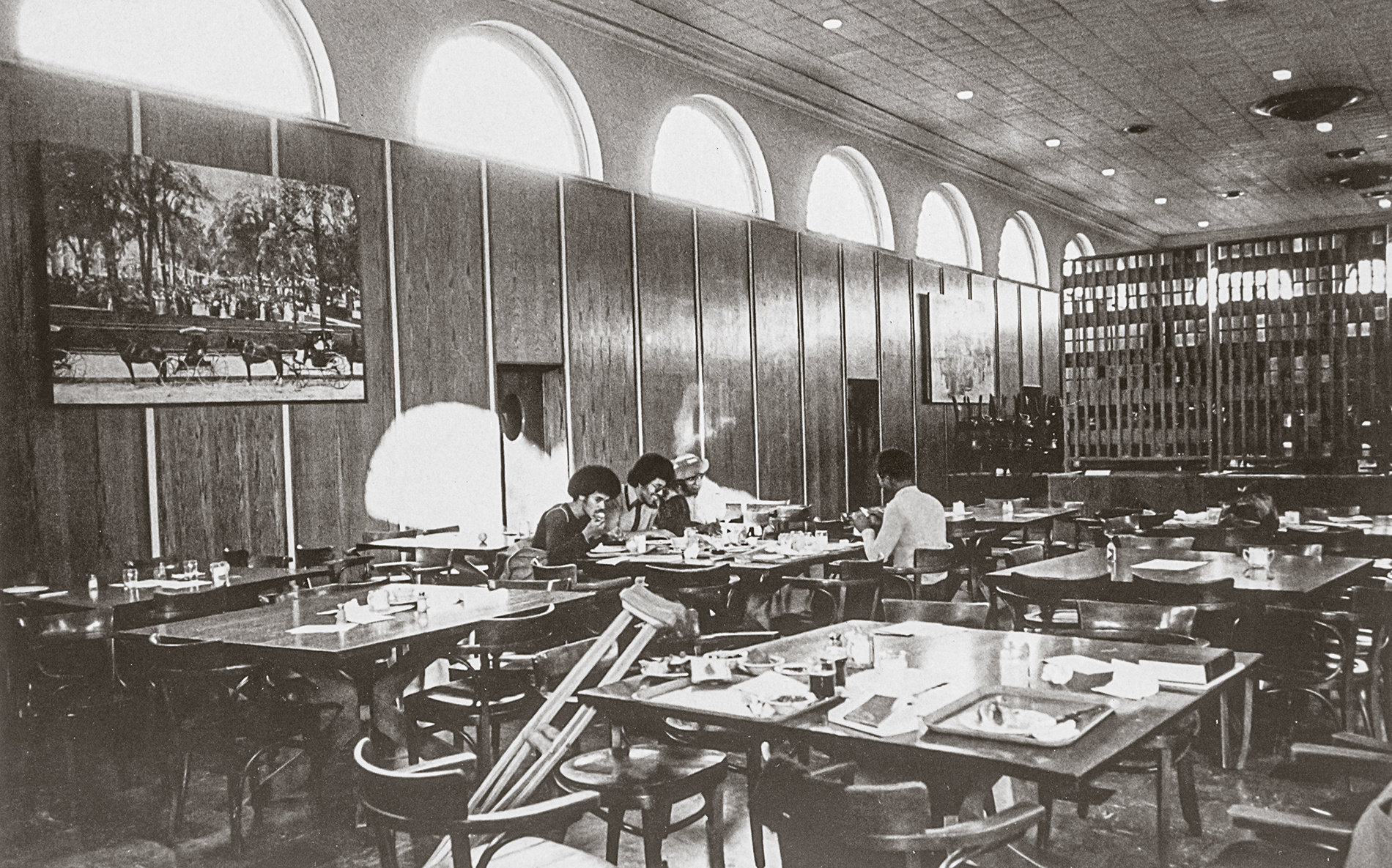
I learned recently—confirmed by the current president of Brown’s Black Student Union—that the informal Black section of the Ratty, which we denizens once fondly called “Little Africa,” is no more. That, after being there for decades, it kind of just dwindled away early in the 21st century.
If that’s because student life at Brown has become more racially mixed overall than in my time, then I guess that’s good. But the news also made me a bit sad. Because at a time when Brown was far whiter than it is today, Little Africa was a place where I could feel at home among other Black students while still being part of the larger university community. And that was invaluable for me.
When I visited Brown post-acceptance but pre-decision, I stayed with a Black student, Harold Weekes ’91, who took me to the Ratty and introduced me to “Little Africa”—about five tables at the left entrance where Black students of various backgrounds, hues, and styles sat, chatting and laughing. I was coming from a majority-white high school in New Jersey. So when I saw this all-Black corner, my heart leapt. Brown may not have been a historically Black college or university (HBCU), but between campus enclaves like Little Africa, the Third World Center (now the Brown Center for Students of Color), and the Black-led Rites & Reason Theatre, I surmised that perhaps I could have a quasi-HBCU experience there. And so I chose Brown.
I made the right choice—and Little Africa was a big part of why. In 1990, according to the University, students who called themselves Black or African American made up only 6.8 percent of the campus. But the sheer diversity of the Black students in that section was exhilarating. I soon learned I wasn’t alone in having gone to a predominantly white high school. Now, as young adults, we finally had a little oasis where we got to be the rule, not the exception, and hence let our guard down.
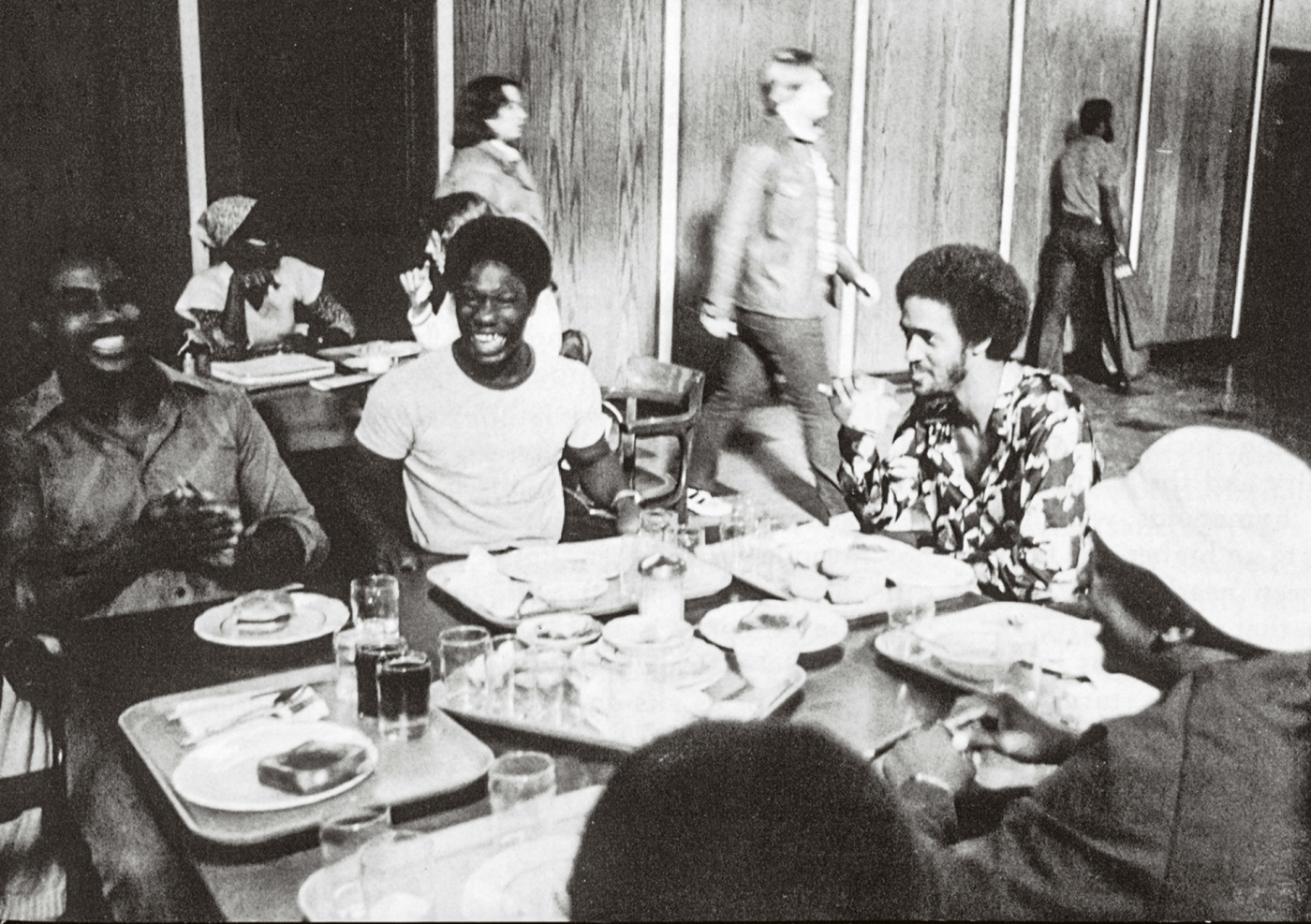
Some white students would look askance at us as they passed. One of them once asked me, “Why do all the Black kids sit together?” I told him that it provided us fellowship in the context of a primarily white institution. What I didn’t ask him was, “Why are so many of the white students sitting at all-white tables?”
When painful things happened to Black folks, Little Africa was where we found succor. We vented our rage and sorrow there after the LAPD beating, caught on video, of Rodney King in 1991. And sometimes racist incidents would hit close to home. I was getting food with some Black friends one night in fall 1990 at the infamous Silver Truck when a white student started shouting racist, homophobic, and antisemitic slurs on Wriston Quad while his frat brothers laughingly egged him on. His outburst was the talk of Little Africa for days to come.
Nearly 35 years later, with a conservative backlash against all things DEI, some people feel
newly emboldened to question Black people’s intelligence. The percentage of Brown students who identify as Black is higher than when I was there but also down slightly from before the Supreme Court banned consideration of race in admissions in 2023. Little Africa may be gone, but I wonder if there are any Black students at Brown today who might appreciate that little mealtime sanctuary.
I found it comforting—even more than I did the Chicken Divan, which I’m also sad to hear is no longer.