
Related Issue
Summer 2026
On West 118th St. in Harlem stands a 1907 former rectory, replete with neo-Gothic details and three floors of three arched windows in a row. But wait! On the right, the windows on floors two and three have been combined to create one very long window spanning both floors. It’s the kind of variation in classical symmetry that might spark a passerby’s double take: Something’s...off. Oh, it’s that! But that’s kind of cool!
Rustam-Marc Mehta ’02 and Tal Schori ’03 had this double take in mind when they renovated the building in 2016 for their client, artist Julie Mehretu, who wanted to blow open the property’s dark warrens of rooms into a soaringly bright haven for multiperson living, as well as a studio space and art showcase. Their logic behind making two windows one? “Sometimes when you make something slightly off, it makes you appreciate the original pattern,” said Schori. Mehta added: “It doesn’t beg for attention but still makes you pause.”
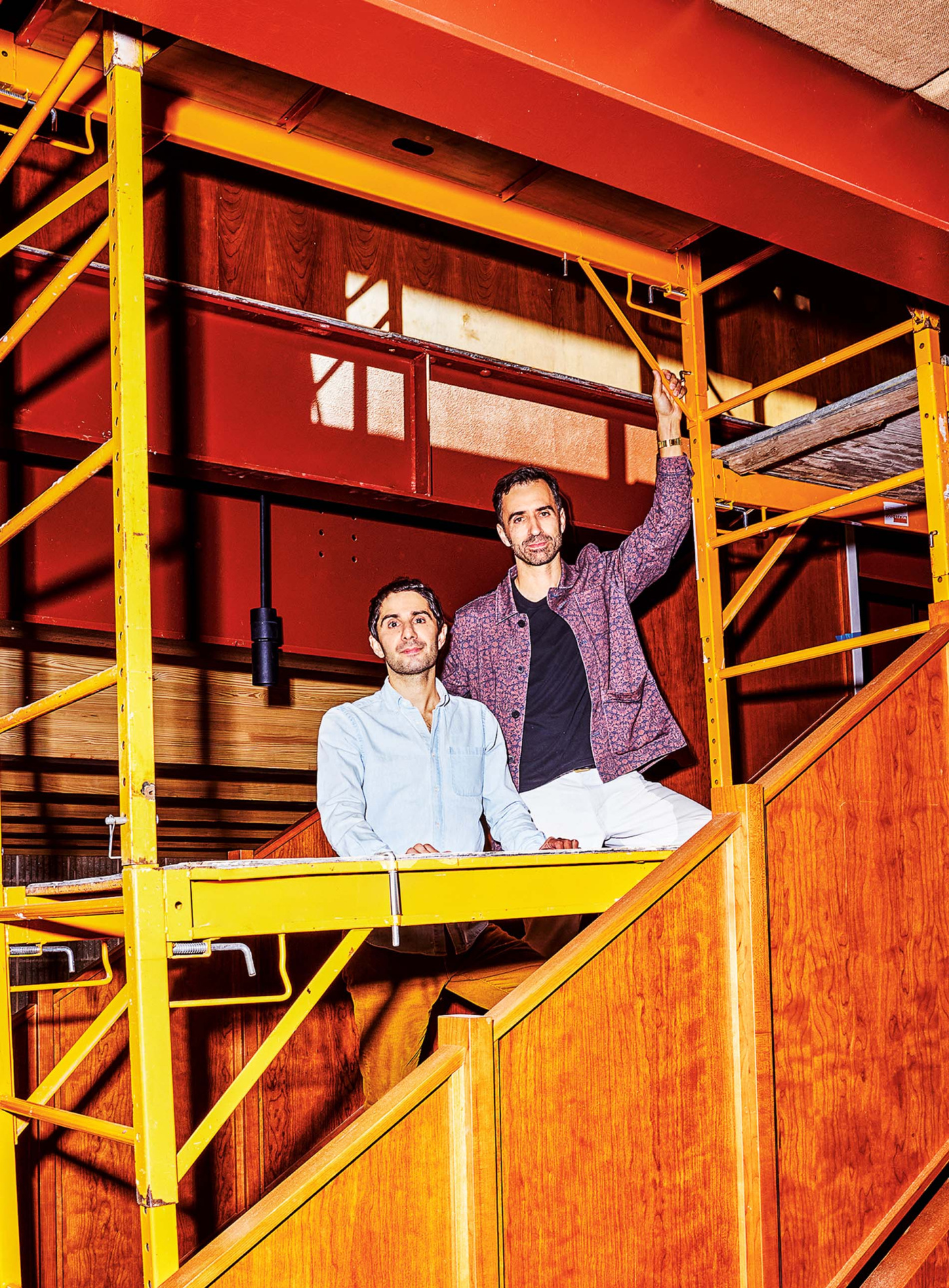
Schori and Mehta met as third graders in Westchester, outside New York City. At Brown, Schori “realized we were both fascinated by design and architecture.” Mehta said that the two of them spent a lot of time “exploring and appreciating Providence and its buildings.” They collaborated on an independent study focused on the Bauhaus and on turning an old trailer in Olneyville into a greenhouse.
Post-Brown, both went to Yale School of Architecture. Mehta ended up working for “starchitect” César Pelli while Schori worked for Deborah Berke, now dean of the Yale School of Architecture. They reunited in 2015 when another Brown friend asked them if they wanted to redesign the front facade and lobby of the Fashion Tower, a 1920s Emory Roth building in New York City’s garment district. The fledgling duo painstakingly redid the entrance to recapture its original opulence, including terra cotta peacocks, but also developed “our own language as designers,” in Mehta’s words, breathing light and space into the narrow lobby by making it double-height and girding it in marble walls in a pleated pattern to evoke a woman’s skirt. Around this time, they formed their firm, GRT Architects.
Since then, in addition to the Harlem rectory, they and their staff have done close to 100 projects, about half residential and the rest a mix of hospitality venues, such as restaurants, and cultural sites like a synagogue restoration. Current and future projects include several locations for the Quality Branded restaurant group, a mixed-use arts building in Brooklyn’s Williamsburg, and a museum project in Maryland. Last year, GRT debuted on Architectural Digest’s prestigious AD100 list.
Schori focuses on residential work while Mehta heads up restaurants. “Decades of knowing each other mean that we never fight over who does what,” said Mehta. Among countless design firms catering to upscale businesses and rich homeowners, Schori said that their special sauce is humility. “We always want to go with the best idea, whether it came from us, the client or an intern in our office.”