
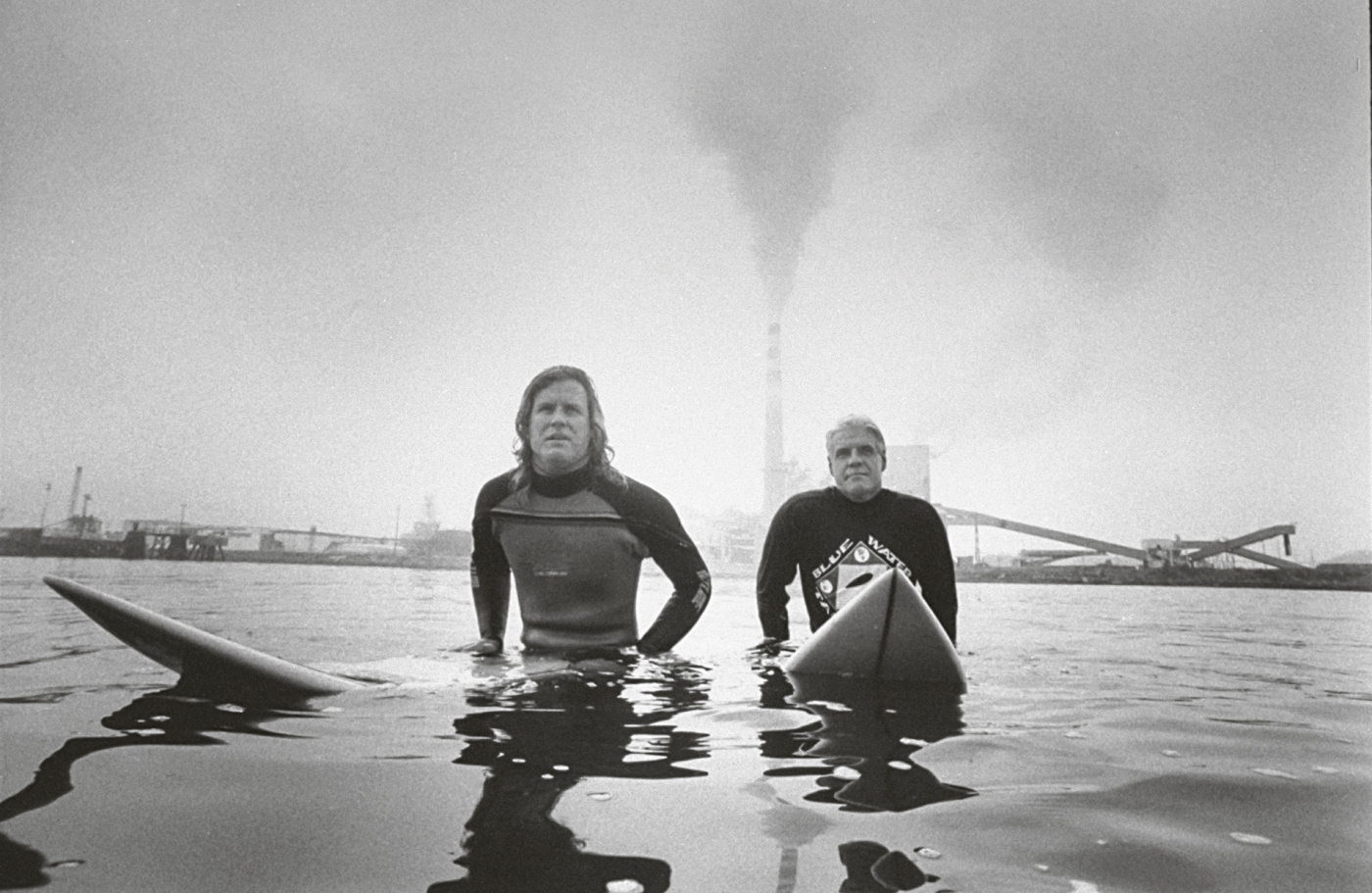
When Chad Nelsen ’92, now the CEO of the nonprofit Surfrider Foundation, campaigned for the establishment of a marine reserve in Rincón, Puerto Rico, he encountered the age-old resistance: Protecting the environment hurts the economy.
But the self-described math and science nerd from Laguna Beach, Calif., had a unique perspective about the interplay between economics and environmental protection. A lifelong surfer and lifeguard, Nelsen lived for a few years on the Mariana Islands, where he was in awe of the relationship Indigenous people have with the ocean. By contrast, urchins have taken over the Laguna Beach seafloor and stucco homes sprawl beside hiking and mountain biking paths.
“I was like, all right,” Nelsen said. “Environmental conservation seems important because I’m watching paradise be destroyed in front of my eyes.”
Knowing that surfers are an integral part of the marine ecosystem, he hired an economist to analyze the impact of tourism on Rincón’s economy. Having shown the economic benefits of tourism, in 2004 Surfrider helped to establish the Tres Palmas Marine Reserve, one of the first community-managed reserves and home to endangered corals.
Having earned a Doctor of Environment in environmental science and engineering from UCLA, Nelsen continues to argue that the environment is the economy. He’s affectionately known as the Godfather of surfonomics.
“The coastal recreation, tourism, and fishing industries generate billions of dollars for the U.S. economy,” Nelsen said. “These industries depend on a clean and healthy coastal and ocean environment, and provide around 3.3 million jobs and $250 billion in GDP.”
Now in his 11th year leading Surfrider, Nelsen oversees an annual operating budget of $16 million, a number that has tripled during his tenure. Collectively, Surfrider maintains 130 to 150 active advocacy campaigns at any given time.
One campaign, run in conjunction with Surfrider international affiliates, centered around eliminating single-use plastics. It contributed to what became a historic UN resolution in 2022, when 175 nations agreed to create a first-of-its-kind, legally binding instrument to end plastic pollution.
“Talking economics, jobs, and dollars is a common language that we all understand.”
Focusing on the economy is a strategy Surfrider is using to oppose a proposed offshore-drilling project that would open up 1.27 billion acres in the Gulf of Mexico and waters off California, Alaska, and previously protected waters off Florida. Last spring, a delegation from Surfrider met with members of the Bureau of Ocean Energy Management (BOEM) to express opposition to the projects. Currently, every member of Florida’s Congressional Delegation has signed a bipartisan letter opposing BOEM’s offshore-drilling plan.
Nelsen notes that safeguarding the environment is a lot like surfing. “You surf for an hour and your cumulative total time actually surfing is about 70 seconds,” he said. Likewise, with conservation, “you spend a lot of time working really hard, and occasionally you get a great victory.”