
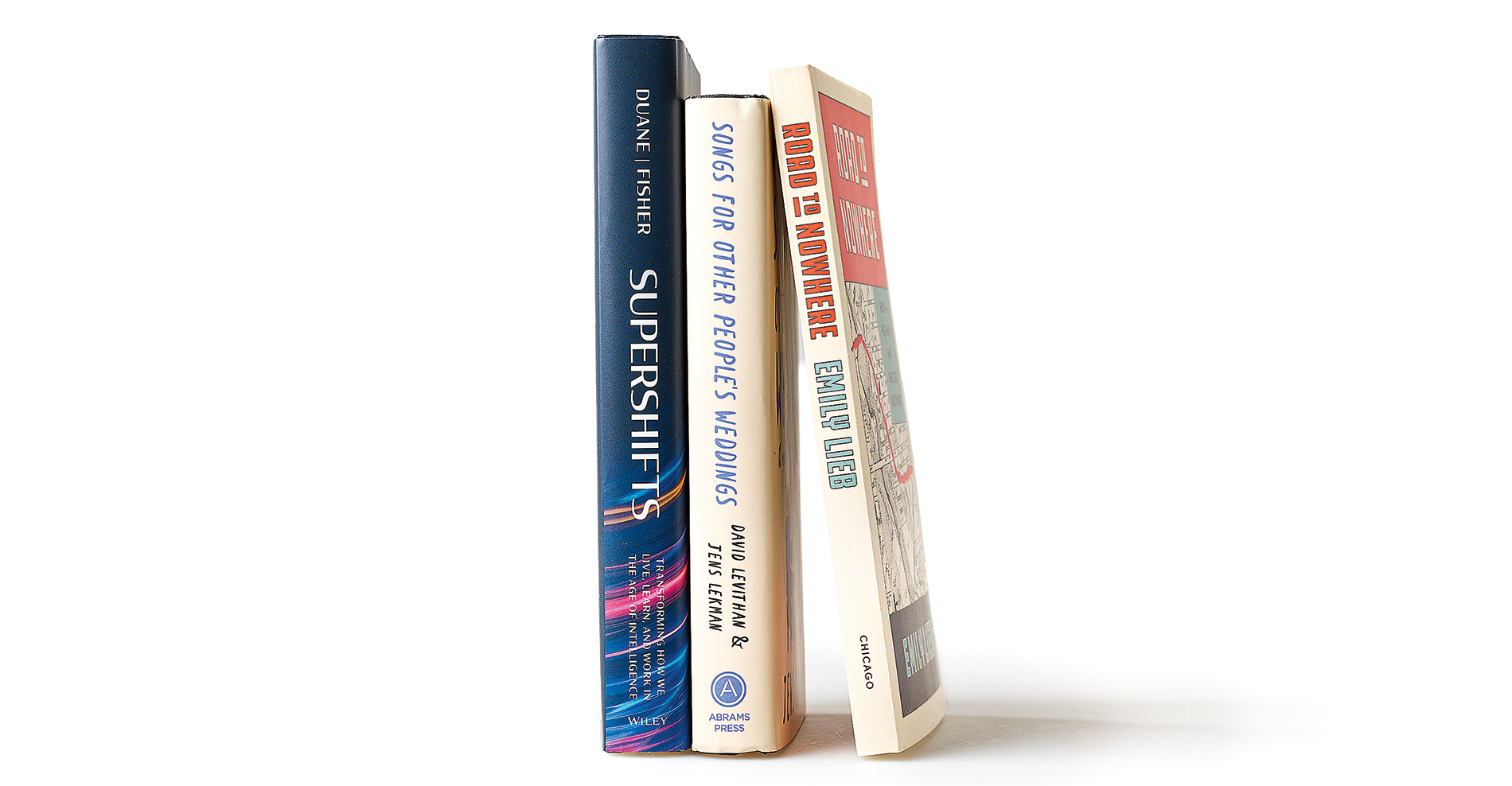
SuperShifts: Transforming How We Live, Learn, and Work in the Age of Intelligence by Ja-Naé Duane ’18 EMBA and Steve Fisher ’16 EMBA (Wiley)
The premise here is that the world is just now leaving what the authors call “The Age Of Engines” and embarking on a new 200-year cycle dubbed the “Age of Intelligence.” Duane is the academic director of PRIME, Brown’s Master of Science in Innovation Management and Entrepreneurship, and a lecturer in engineering, while Fisher is a futurist and writer. This new age, they argue, will come about as advances in artificial intelligence, quantum computing, nuclear fusion, biotechnology, and robotics all converge—leading to societal and business changes we are only just beginning to consider. The book also tracks the fictional Sinclair family, whose members are checking in from the year 2040, as they navigate this new world, aided by their neural implants, smart surfaces, and AI personal assistants.
Songs For Other People’s Weddings by David Levithan ’94 (Abrams)
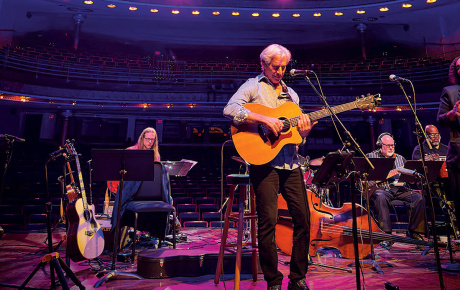
This clever, comic novel is actually a collaboration between Levithan, a prolific Young Adult fiction novelist and editor, and Jens Lekman, a well-known Swedish singer-songwriter, who wrote the songs that each chapter revolves around. The narrative itself is parceled out across 10 weddings where you’ll meet J, an accidental wedding singer who writes original songs for each couple. J’s girlfriend V often rides along to these gigs, but soon enough she will move for work and J must decide if he will follow along or not. Lekman has also released a companion album that includes all the songs that populate the novel.
Road to Nowhere: How A Highway Map Wrecked Baltimore by Emily Lieb ’99 (University of Chicago Press)
Rosemont was a thriving Black community in West Baltimore with row houses, stores, and a large park. But in 1957, it was also a prime target for an east-west expressway. Soon enough the Baltimore City Council voted to condemn 900 homes in the neighborhood—only the expressway was never built. In this deeply researched, very readable book, Lieb recounts the debates and decisions that led to three attempts to build the expressway and the disastrous fallout that Rosemont’s remaining residents endured. As Lieb points out, even a ghost highway can leave lasting scars.