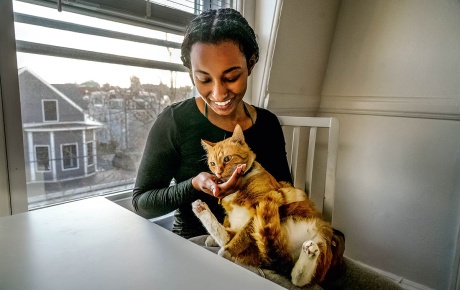

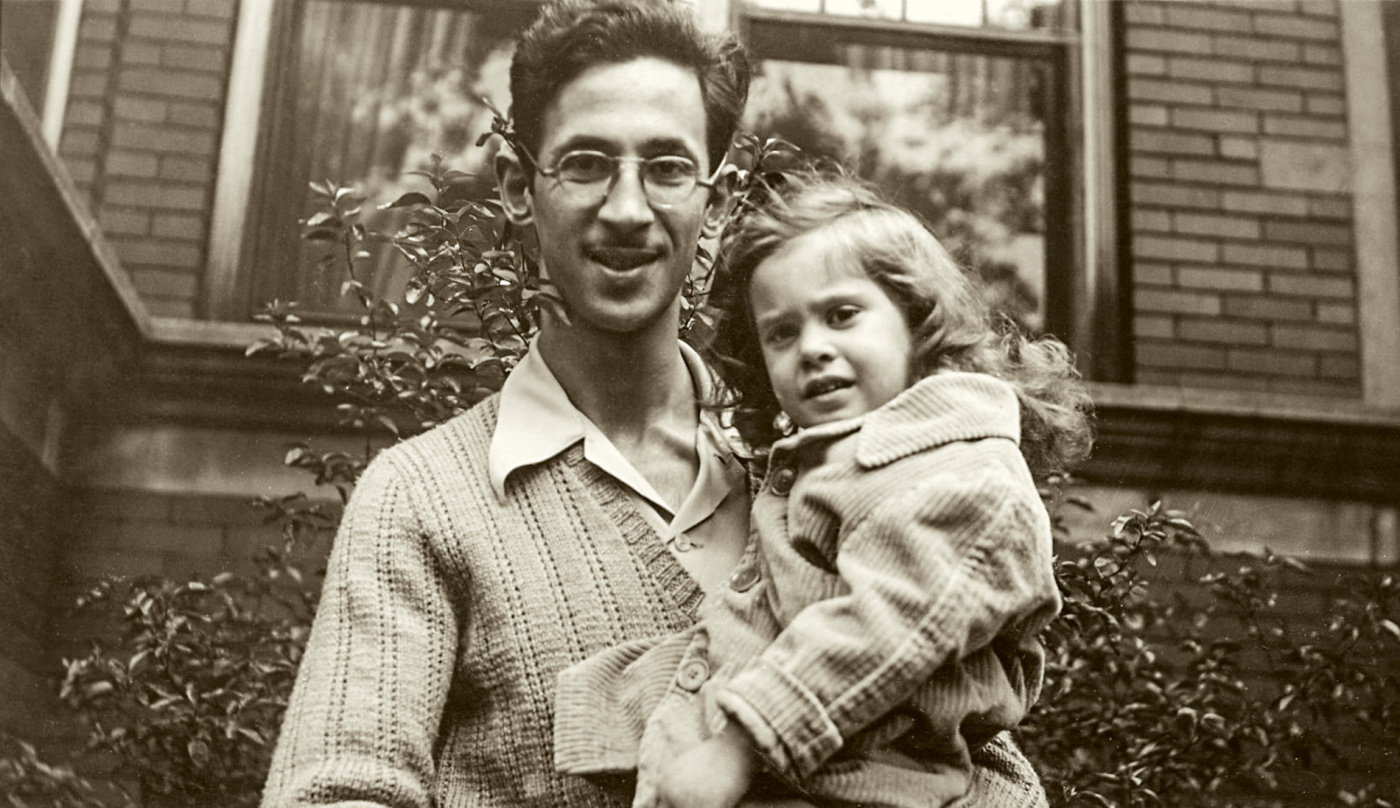
When Leslie Schover ’74 was a girl, she remembers, her father returned from a business trip with a lump of green glass—sand melted by an atomic test. “You can’t keep this because it’s radioactive,” he told her. Schover’s dad helped make nuclear isotopes for the Manhattan Project, and she partly grew up in Oak Ridge, the secret city in Tennessee where the project was located.
Her family stories were often woven around WWII-related intrigue.
The novel she’s based on those memories, Fission: A Novel of Atomic Heartbreak, began germinating decades later when it was revealed that two of her father’s colleagues at Oak Ridge had actually been Soviet spies. “Did my dad know either one of them?” she says she wondered. “How indignant he would have been that they were spies!”
Schover, who majored in psychology at Brown and went on to work at MD Anderson Cancer Center around issues of cancer, sex, and fertility, wanted to write a nonfiction account of Oak Ridge, but nobody was alive to interview. So, she decided, “I thought I could do a better job writing it as a novel.”
The result is a story less about atomic espionage and more about gender roles and being Jewish in America. Doris, the thinly veiled version of Schover’s mother at the book’s center, balances a surprise baby with her young marriage and a burning desire to finish college.
At Oak Ridge, she befriends another wife, Betty, a Southern belle who, learning Doris is Jewish, asks where her horns are. (Schover says that’s based on a real story her mother told her.) Doris also embarks on an affair with one of the scientists who’s actually, unbeknownst to her, a Russian spy.
Writing the novel, says Schover, she was reminded of the sometimes blurry line between fact and fiction. That story about the radioactive lump of green glass? Near the end of her father’s life, when she shared that memory with him, he disavowed it. “I would never have brought that home,” he insisted.
Schover’s parents were uncommon in that they knew what they were working on, a secret that sets up the novel’s continuing tension around what the bomb would mean. Her father—and his fictional counterpart in the book—actually signed a petition against a surprise strike on Japanese cities.
Schover wrote the novel, she says, because “I wanted to understand my parents’ emotional and moral dilemmas as ordinary people who were swept up in the birth of the atom bomb.” But, she adds, “To me, the book is really about Doris’s coming of age during an era when women’s opportunities were enlarging, but at a pace that felt painfully slow. Now the feminism that I took for granted as a teen and young woman is again at risk.”