
Over a slow drum and bass riff, opening shots in grainy wiggly animation show a blocky building overlooking a body of water. “Who wants a condo with a beautiful downtown view?” sings a voice over the music. “Follow me, I’ll show you.”
It turns out that the “condo” is actually Houston, Texas’s Harris County Jail (HCJ), the nation’s third-largest of its kind, with nearly 9,000 inmates. And then the voice, that of the singer-songwriter known as Stew, drops the punch line: The windows on the building are actually fake. “Windows without a view,” he sings. “A metaphor too perfectly sad to be true.”
It’s an unusually arty way to open a documentary, which is exactly what this is. Directed by Emmy winner Robe Imbriano ’86, Criminal homes in on HCJ, whose no-pre-trial-release-without-bail policy for many inmates has been a practice criminal justice reformers have labored to end. At HCJ, we learn in the documentary, more than two-thirds of inmates at any given moment are awaiting trial—likely meaning that they couldn’t afford bail to get a pre-trial release. And nine out of 10 Black and brown inmates there are unable to afford bail, which is about $500 on the low end.
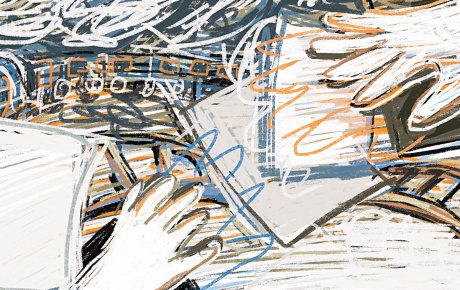
But in Criminal, viewable at newyorker.com/culture/the-new-yorker-documentary, such grim facts are delivered via the singing-songwriting team of Stew and Heidi Rodewald, who created Broadway’s acclaimed Passing Strange. Here, they have set the entire piece to original rock music sung by Stew, including lyrics derived from actual inmate letters, such as one that becomes the documentary’s haunting musical refrain: “Please see if you can figure out why the system is not doing their job and helping us in here.” And because Imbriano had no access to HCJ and also wanted to keep inmates anonymous, the documentary is animated throughout in the same grainy, always trembling montage style as its opener.
Imbriano, a New Yorker with years of director-producer experience at ABC and on Oprah Winfrey’s talk show, says he got the idea for Criminal after talking to staff at the advocacy groups Texas Jail Project and Equal Justice Under Law about the harsh bail policy at HCJ. (The documentary contains a painful actual video moment of an enraged judge raising an inmate’s bail merely because she answers him with a “yeah” instead of a “yes.”) “We need to find a way to talk about systems,” says Imbriano. “But it’s gotten to the point where people stop listening the minute you say ‘bail reform’—so I thought the best way to get people’s attention was through music and performance.”
The documentary, funded by executive producer Dominique Bravo and The Ford Foundation, won best animated short at last year’s Urbanworld Film Festival. Imbriano says he knows that Criminal won’t necessarily bring bail reform to HCJ or anywhere else, especially amid the conservative backlash the issue has received in recent years. “But with people’s short attention spans these days,” he says, “if I can spark a conversation, or keep it alive, then I feel I’ve somehow won.”