
Related Issue

Summer 2026
In his 1841 essay “Self-Reliance,” American philosopher Ralph Waldo Emerson issued an elegant command: “Trust thyself: every heart vibrates to that iron string.” In 1985, singer-songwriter Bob Dylan echoed the sentiment in his song “Trust Yourself”: “Don’t trust me to show you love / When my love may be only lust / If you want somebody you can trust, trust yourself.”
True, Dylan’s lyrics may be less of the noble Emersonian variety and more akin to something that nobody ever wants to hear from a boyfriend. But for Brown History Professor Kenneth Sacks, an Emerson scholar and a “big Dylan fan,” echoes between Emerson and Dylan occur with uncanny frequency. While writing his 2003 book Understanding Emerson, said Sacks, he saw parallels in how they both grappled with themes of individuality, celebrity, and political obligation—but particularly of personal agency, especially in the face of fandom that sometimes sought to stifle their creative exploration. “Once I figured out that self-reliance seemed to be the parallel between them,” said Sacks, “the rest of it fell into place.”
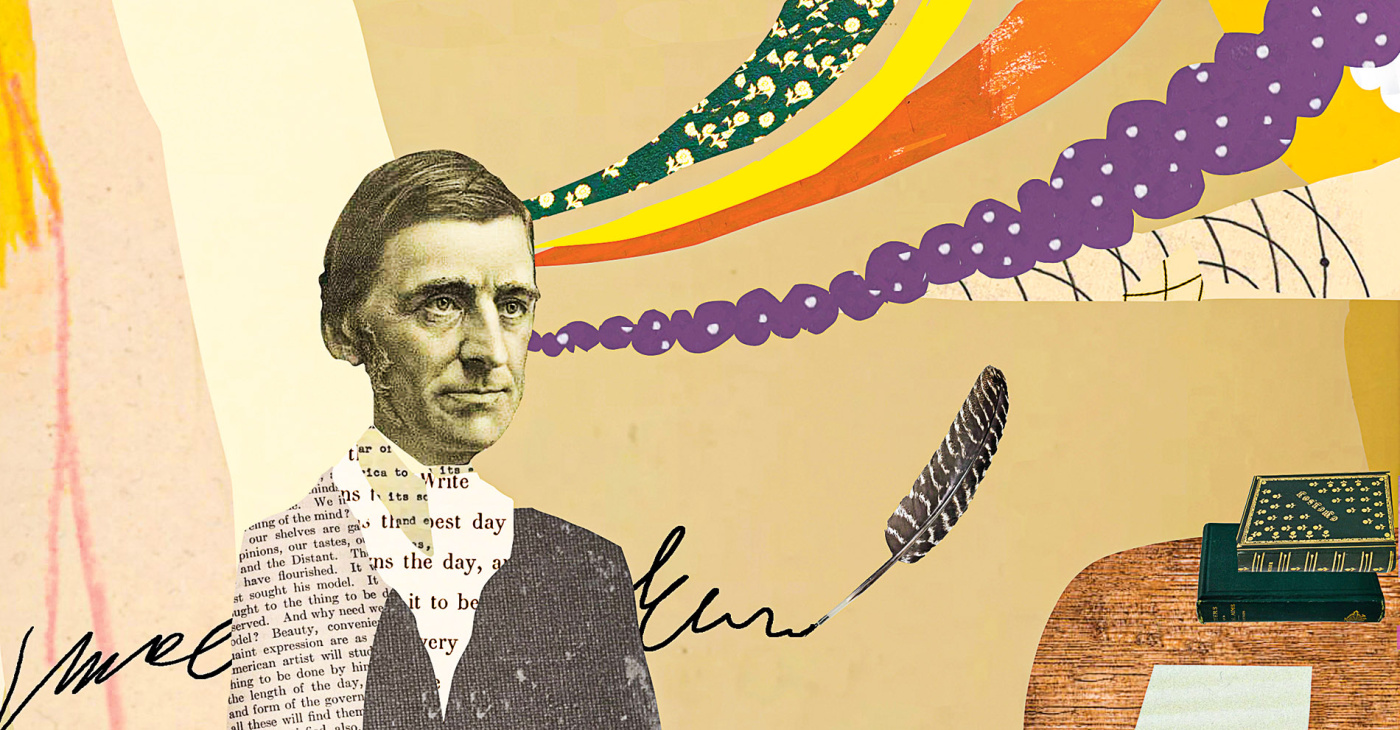
Out of that realization came the class Walden and Woodstock: the American Lives of Ralph Waldo Emerson and Bob Dylan, which Sacks has now taught for a decade. In the class, students read Emerson’s essays and Dylan’s autobiographical writing, listen to some of Dylan’s protest songs (“Masters of War,” “The Times They Are a-Changin’”), watch Dylan biopics such as I’m Not There, by Todd Haynes ’85, and James Mangold’s A Complete Unknown, and read historical scholarship about Emerson and Dylan. Each week of the course has a different theme, such as “Art and Society,” which examines both men’s political involvements with abolition and civil rights, and “New Media, Cult of Celebrity, and Artistic Integrity,” which probes how both adapted to media advances and celebrity culture.
While some students entered the class skeptical about the connection between Emerson and Dylan, most left understanding that both grappled with similar issues. “They’re strange bedfellows,” said Isabel Tribe ’27, “but the more that you get into this class, the more you can see that they were both deemed by media and culture as American folk heroes.”
“Self-Reliance,” an essay about the need to resist conformity that has become a foundational text in America’s long romance with individualism, provides the philosophical underpinning of Sacks’s class. “You learn more about self-reliance as a concept than you do about either Emerson or Dylan,” said Abigail Wahl ’27.
For Emerson, Sacks said, self-reliance is “about this capacity to be yourself but not be socially compromised.” Beginning his writing and oratory career as a preacher in pre–Civil War New England, Emerson conceived of self-reliance as a way to resist the very institutions he belonged to, such as the church. “I am ashamed to think how easily we capitulate to badges and names, to large societies and dead institutions,” he wrote.
For Dylan, Sacks argued, self-reliance is evinced in his constantly shifting persona. “He was a folk singer but also went electric. He went from being a very identified Jew to a very, very evangelical Christian.” To him, the singer is somebody who’s constantly evolving and reacting to the world that he sees, not constrained at all by expectations society might have.
Yet, said Sacks, Dylan’s persona shifts don’t mean that he was inauthentic. “It was kind of like looking at light refracted from different ways and combinations of colors. Evolution is probably the most important word there.”
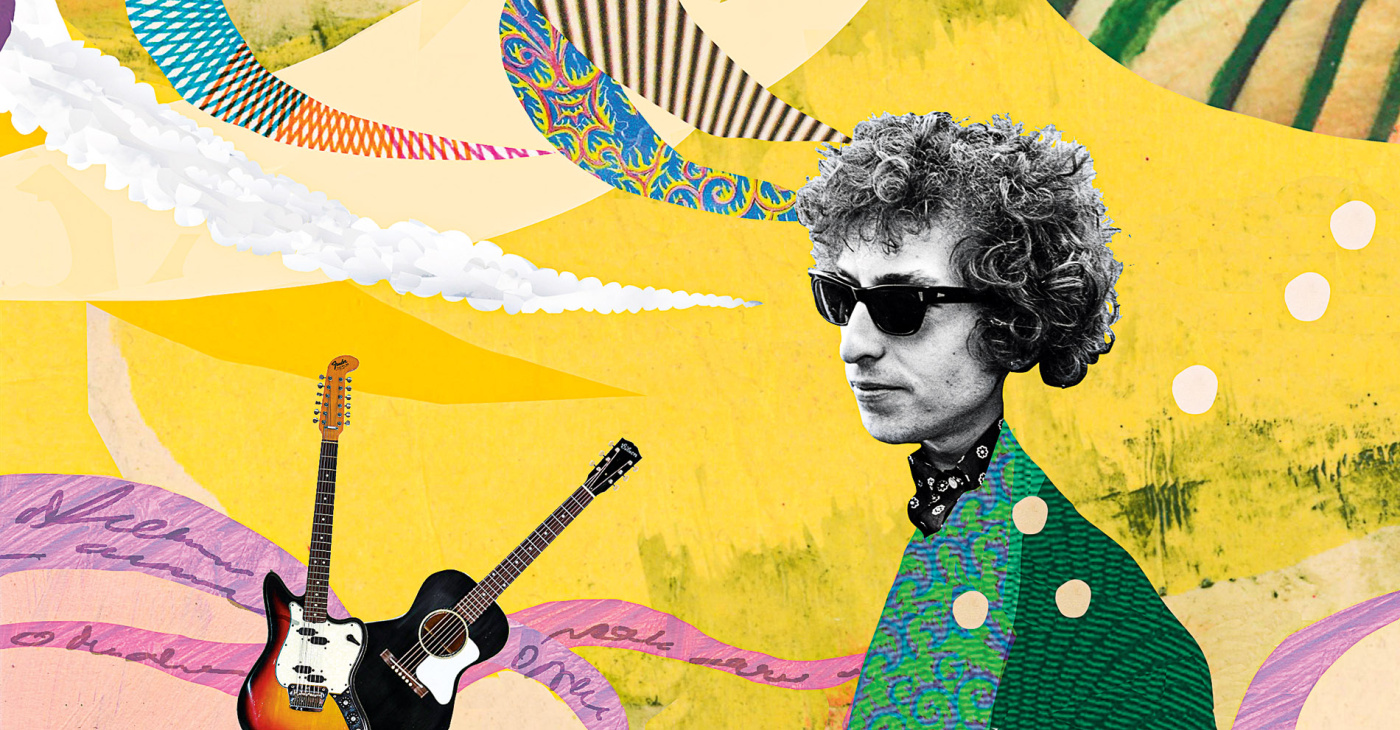
Dylan and Emerson were productive in times of crisis: Emerson during the horrors of slavery and the Civil War, and Dylan during the Vietnam War. Sacks said both were imperfect voices in these moments. Students learned about the ambivalence of both figures toward political activism. While Emerson defended the radical approach of abolitionist John Brown, his private journals slighted Black Americans and enslaved people, such as an 1853 entry: “...the black man is created on a lower plane than the white.” And although Dylan wrote stirring civil-rights anthems, including “Only a Pawn in Their Game,” which he sang at the 1963 March on Washington, just a year later he swore off writing polemical songs and declared that “politics is bullshit.”
In the class, students debated whether this ambivalence reflects or contradicts Emerson’s idea of self-reliance. They read Benjamin Anastas’s “The Foul Reign of Self-Reliance,” which decries the Emersonian ideal as “responsible for excessive love of individual liberty that debases our national politics” and dissuades society from taking collective action. But Gunner Peterson ’27 pushed back on that take: “Self-reliance isn’t rejecting social movements, but not letting them take a hold of you so strongly that you lose a sense of individuality.”
Sacks conceded that both men’s work and views must take into account their social stature. “The problem I have with this course is that we’re dealing with two white guys,” he said. “It’s not that they’re not deserving of study, but that they both had the privilege to fail.” They also had the privilege, he said, of stepping back from social movements when they wanted to because the fate of their own life and liberty was not hanging in the balance.
Some students said that the class helped them make sense of the current upheaval in the Unites States. “These were two men who really believed in dialogue,” said Tribe. “I don’t think they would have supported our current retreat into our own echo chambers.”
Peterson said that “now is a uniquely tumultuous time to be taking any class in American history,” but he was comforted by the voices of these two thinkers. “You find people who are dealing with a similar struggle that I’ve felt, which is: What is my place in the current moment to pursue individual passions in the face of looming threats that require people to band together?”
Sacks argues that Emerson was one of America’s first celebrities, because Emerson was an “influencer for the ideas of Transcendentalism and an in-demand lecturer whose appearances drew long lines.” (The British press even called it “Emerson-mania.”) Privately, Emerson wrote: “Popularity is for dolls; a hero cannot be popular.” But, as Sacks argues in his 2025 book Emerson’s Civil Wars, Emerson was a shrewd performer who used celebrity to his advantage and “rode the wave of his own celebrity status. He squeezed profit out of emerging technologies by speaking publicly and then publishing his talks.” Although Dylan emerged in a more evolved era of mass media, he also expressed ambivalence about fame, once saying: “I try to be an anonymous person.”