
Related Issue

Fall 2026
Even those well-versed in U.S. history probably don’t know about Rebecca Lee Crumpler, the first Black woman to earn a medical degree.
“When she was alive it just wasn’t important to keep records about people who looked like her—notwithstanding her accomplishments,” said Shani King ’95, vice dean and professor of law at Rutgers Law School, who moonlights as a children’s book author.
Crumpler’s accomplishments were many. In 1864, she became the first Black female medical doctor at age 34. After the Civil War, she traveled from Boston, where she lived with her husband and daughter, to Richmond, Va., to provide medical care to recently freed men, women, and children. Later she wrote A Book of Medical Discourses, a two-volume medical handbook for women about common maternal and pediatric illnesses.
“Yet she’s not well-known,” King said. “How can that be? It was really striking to me.”
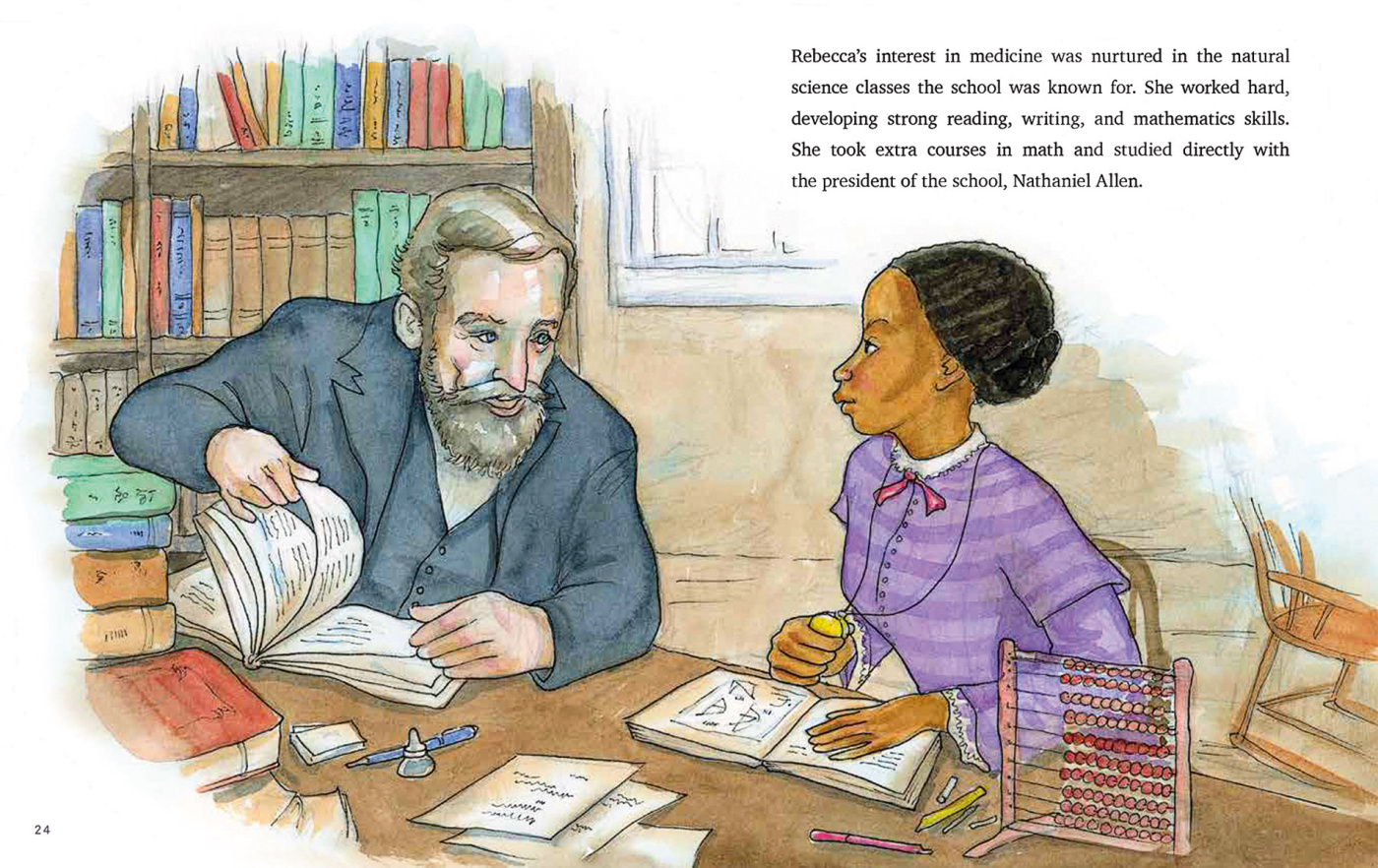
King learned about Crumpler from a former law school mentor. Intrigued, he set out on a quest to discover as much as possible about her, which resulted in Finding Rebecca (Tilbury House, 2024), King’s 64-page children’s book.
Kirkus Reviews calls Finding Rebecca “a study in perseverance—both that of the book’s subject and the author who unearthed her story.” Illustrated by Nicole Tadgell, the book is geared toward kids ages 7 to 10 but also appeals to adults, with details such as Crumpler urging other women to become MDs and her work in Richmond paying close attention to what doctors now call “social determinants of health,” like housing and education. The author notes that Frederick Douglass became the most photographed person of the 19th century yet there are no verified photos of Crumpler. The book encourages readers to wonder for themselves about why she was not famous in her time.
Crumpler attended the Twelfth Baptist Church, which served prominent members of the African American community, King wrote. After retirement, she taught at the innovative West Newton English and Classical School (her alma mater) and published her book, which offered “practical advice for checking and treating symptoms” and “refuted false rumors.”
King is an expert on children’s rights. He used to represent children in the foster care and immigration systems and in guardianship and school discipline cases. At Legal Services for Children, a San Francisco nonprofit, he was the only male lawyer and the only Black male lawyer on staff, even as the organization served many Black children. His young clients were proud to have a lawyer “who looked like them,” he said. “One of the things I try to do with [my] books is provide more of that kind of representation for kids.”
Finding Rebecca is King’s third children’s book. He has several others in the works, including one on Hazel Scott, a jazz and classical pianist and singer who in 1950 became the first African American to host her own TV show.
“Have you heard of her?” King asks with excitement. “You should look her up. The more I learn, the harder it is for me to believe she’s not more widely known. It’s just—it’s bonkers to me.”